Introduction
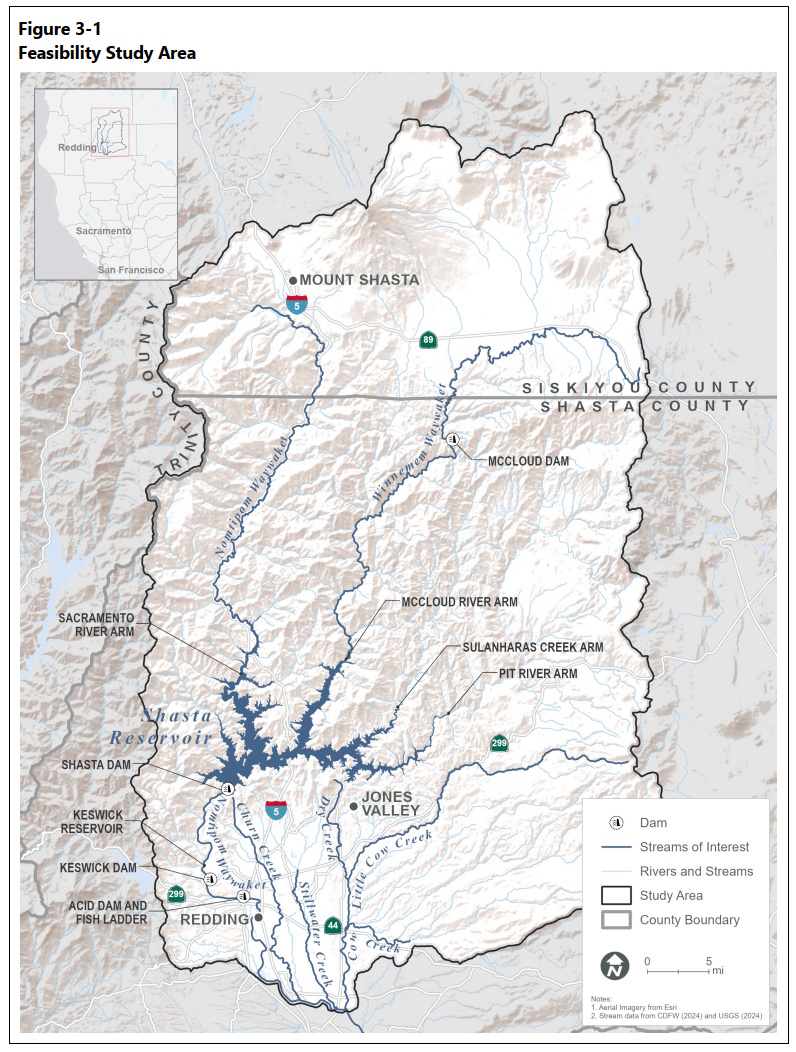
With the completion of Shasta Dam in 1945, three of the four historic populations of winter-run were extirpated from historical habitat above Shasta Dam. The historical populations included those in the Little Sacramento River, (Pit, Fall, and Hat rivers), the McCloud River, and Battle Creek (Lindley et al. 2004).
The Shasta Dam Fish Passage Evaluation was a previous effort by the U.S. Bureau of Reclamation to determine the feasibility of reintroducing winter-run, Central Valley spring-run Chinook Salmon, and steelhead to tributaries above Shasta Dam (Reclamation 2017).
In spring 2023, the Winnemem Wintu Tribe, CDFW, and NMFS entered into historic salmon management and stewardship agreements. The purpose of these agreements was to establish a co-management framework that integrates Winnemem Wintu Tribe’s traditional knowledge and cultural tribal values with CDFW’s and NMFS’ recovery responsibilities, research, and potential management practices. The goal is to restore traditional cultural fisheries, including state and federally listed winter-run impacted by loss of access to historical spawning grounds above Shasta Reservoir, to the extent possible and consistent with Indigenous Rights and federal, state, and local laws and regulations (CDFW and Winnemem Wintu Tribe 2023).
Starting in the summer of 2022, pilot winter-run reintroduction efforts occurred on the McCloud River. These efforts included streamside egg incubation and fry production, downstream juvenile trapping, and transport of collected juveniles around Shasta Reservoir to release locations in the Sacramento River downstream of Keswick Dam. In addition to the pilot reintroduction efforts, a variety of actions were completed to investigate the feasibility of fish passage and reintroduction of Chinook Salmon back to the McCloud River. Funding for these efforts was provided by the California Department of Fish and Wildlife and the Wildlife Conservation Board.